How much does a solar panel installation cost in the Philippines?
There is no single price for solar panels in the Philippines. Residential systems generally start in the low hundreds of thousands and rise with system size, and independent guides put a typical home installation anywhere from around ₱100,000 to ₱500,000 depending on how much electricity the household uses. With Solviva, you can switch to solar for as low as ₱7,736 a month for 60 months, with a ₱0 down payment, or pay in cash up front.
Your exact solar panel installation cost comes from a free solar consultation and site assessment, because the final number depends on your roof, your shading, your electricity use, and whether you add a battery.
Solviva's smallest system is 5 kWp and grid-tied, and it is recommended for households with electricity bills of ₱10,000 and above. Below is what shapes the final price, the two ways to pay, what comes with the system, and what to look for when you compare solar companies in the Philippines.
What a 5 kWp solar panel system includes
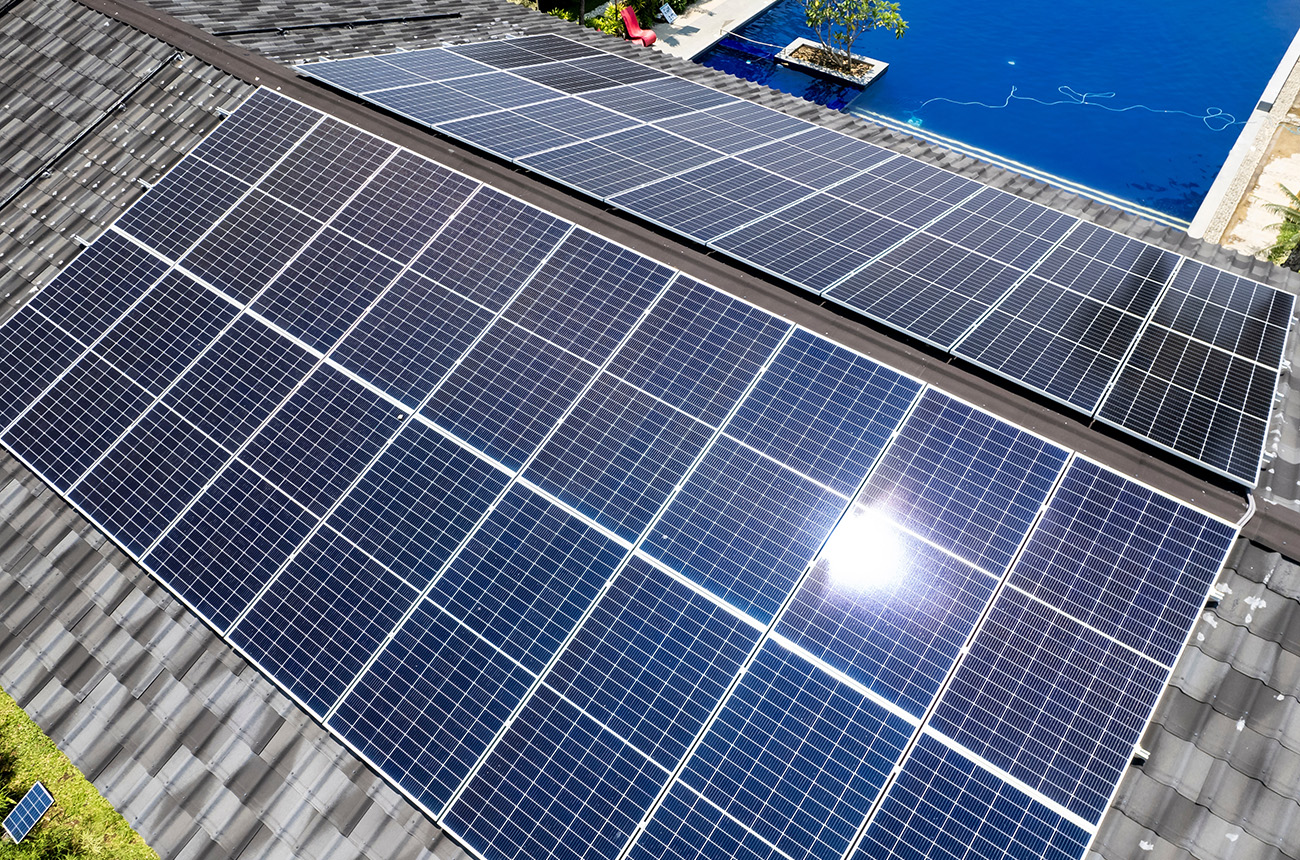
System size is the single biggest factor in solar panel prices in the Philippines. A 5 kWp Solviva system uses 8 panels rated at 630W each, for 5.04 kWp in total.
Each panel measures about 2.4 meters by 1.1 meters, so the system needs 25 to 30 square meters of clear, unobstructed roof space. Larger systems generate more power, take up more roof, and cost more.
Not sure your roof has the room? Our guide to how much roof space solar panels need shows how to measure it, and our post on what makes a roof solar-ready covers roof type and condition.
What affects solar panel prices in the Philippines
Several things change the final quote:
- System size. More panels mean more generation and a higher price. Sizing is based on your actual electricity consumption, not on a package.
- Roof type, shading, and layout. Roof material, pitch, and orientation affect how the system is designed and mounted. Nearby trees, water tanks, or taller structures cast shade that changes panel placement.
- Battery storage. Batteries store excess solar power for use at night or during outages. They are an optional add-on and are priced separately from the base system.
- Electricity consumption. A household using more power during daylight hours gets more value from a larger system, which shifts the cost and benefit calculation.
Why the final price comes after a site assessment
No reputable installer can give you a firm number over the phone. A site assessment looks at your roof condition and available space, shading through the day, your target system size, and your actual electricity use from recent bills.
That is what turns a price range into a quote that fits your home. Solviva's solar consultation and site assessment is free, and there is no obligation to proceed.
Solar panel installment plan Philippines: how Rent-to-Own works
Cost is the most common reason Filipino households delay switching to solar. A solar panel installment plan removes the upfront barrier.
With a cash purchase, you pay for the system in full at the start and own it immediately.
With Solviva's Rent-to-Own program, you start with a ₱0 down payment and make fixed monthly payments for the length of the term. You own the system once the term is complete. Payments are fixed for the whole term, so you know the amount from day one.
Rent-to-Own has four steps:
- Customized quote based on your roof and consumption
- Same-day credit assessment
- System design and layout
- Installation and energization
The whole process takes seven days.
Solar loans and other ways to pay for solar in the Philippines
Filipino homeowners looking at a solar loan in the Philippines usually have a few routes available:
- Cash purchase. The lowest total cost, paid up front.
- Rent-to-Own. ₱0 down payment, fixed monthly payments, ownership at the end of the term.
- Bank loans and credit card installments. Some homeowners arrange financing through their own bank or card issuer, separate from the installer.
When you compare a solar loan against an installer's installment plan, ask for the cash price and the financed total, the length of the term, any fees, and what happens if you pay early. A plan with a low monthly payment and a long term is not automatically the cheaper option. Our comparison of cash purchase and Rent-to-Own covers which one fits which household.
What your installation includes
A solar panel installation is more than panels on a roof. A complete Solviva system includes:
- Solar panels. Capture sunlight and convert it to DC power.
- DC wires, breakers, and surge protection. Carry power from the roof to the inverter, with protection devices along the way.
- Inverter. Converts DC power into the AC power your home runs on.
- AC cables and breakers. Connect the inverter to your main electrical panel.
- Battery (optional). Stores excess solar power for later. Priced separately.
In a grid-tied system, your home uses solar power first. When solar is not enough, the grid tops it up automatically, so there is no interruption and nothing to switch over manually.
What happens after installation
After energization, your project engineer walks you through the system: how it works, how to switch it on and off, how to monitor it, and basic maintenance. You can check how much your panels produce and how much your home uses from a mobile app or a website.
Solviva also offers an annual preventive maintenance service. It covers wet cleaning of the panels, clearing debris from underneath them, a visual check for cracked glass, loose conduits, or water in the inverter, and a check that the monitoring app is reporting data correctly. The first visit is scheduled about a year after installation, depending on how dusty your area is.
For technical concerns, your request goes to our field engineers. Emergencies get a same-day response, and non-emergency requests get a response within 24 to 48 hours. Our post on what happens after your solar installation covers this in more detail.
Warranties cover the equipment and the workmanship
Solviva systems are designed to last 25 to 30 years. Coverage breaks down as follows:
Panel output declines by about 0.4 percent per year, which is why performance warranties run so long. A panel still producing decades from now is the point of the investment.
How to compare solar companies in the Philippines
There are many solar panel installation companies operating in the country, and quotes for the same house can differ widely. Before you sign anything, check the points below. For a longer checklist, see what to look for in a solar provider in the Philippines.
- What the quote actually covers. Some quotes exclude mounting, wiring, permits, or net metering support.
- Warranty terms in writing. Ask for the length on panels, inverter, battery, and workmanship separately, not one headline number.
- Who handles after-sales service. Find out whether the installer maintains its own field team or subcontracts.
- How long the company has been operating. A 25-year warranty is only as good as the company standing behind it.
- Whether sizing is based on your bills. A proper design starts with your consumption, not a fixed package.
Solviva is an AboitizPower company, and installations are handled end to end by our own engineering team.
Is solar energy in the Philippines worth it?
Grid rates move with fuel costs and generation charges. A solar system you own does not get repriced. That is the core of the case for solar energy in the Philippines: you swap a variable monthly cost for a fixed one, and at the end of a Rent-to-Own term, you own the system outright.
Over the 25 to 30 year life of a system, that produces a return on your investment. Actual figures depend on system size and how much electricity your household uses, which is exactly what a site assessment establishes.
What to remember before you request a quote
- System size drives the price. Solviva's smallest system is 5 kWp, with 8 panels and 25 to 30 sqm of roof space required.
- Roof type, shading, layout, and any battery add-on change the final quote.
- You can pay in cash, or start with a ₱0 down payment through Rent-to-Own at as low as ₱7,736 a month for 60 months.
- Your installation ends with a walkthrough, monitoring access, and a support team.
- Warranties run from 1 year on workmanship to 30 years on panel performance.
Frequently asked questions
How much does a solar panel installation cost in the Philippines?
It depends on system size, roof, and whether you add a battery. Solviva systems start at 5 kWp, and you can switch with a ₱0 down payment and fixed monthly payments of as low as ₱7,736 for 60 months. A free site assessment produces your exact quote.
What is the smallest solar panel system available?
Solviva's smallest system is 5 kWp, grid-tied, using 8 panels at 630W each. It is recommended for households with electricity bills of ₱10,000 and above.
Can I pay for solar panels monthly in the Philippines?
Yes. Solviva's Rent-to-Own program requires a ₱0 down payment and fixed monthly payments, and you own the system at the end of the term.
How much roof space do solar panels need?
A 5 kWp system needs 25 to 30 square meters of clear, unobstructed roof space. Each panel is roughly 2.4 meters by 1.1 meters.
How long does solar panel installation take?
From customized quote to energization, the Rent-to-Own process takes seven days.
Do solar panels work during a brownout?
A standard grid-tied system does not run during an outage. Adding a battery allows stored power to be used when the grid is down. Our guide to grid-tied vs. hybrid solar explains the difference.
How long do solar panels last?
Solviva systems are designed to last 25 to 30 years. Panel output declines by about 0.4 percent per year and carries a 30-year performance warranty.
Ready to find out what solar would cost for your home?
Book a free solar consultation and site assessment, and a member of our team will go over your options.
System sizes start at 5 kWp, grid-tied, and are recommended for electricity bills of ₱10,000 and above. Actual price and savings vary depending on system size and usage.