What Happens After Installation? Your Guide to Solar Maintenance and Support
The day your system switches on, your roof starts producing power. That part is straightforward. The longer question is what happens next. A rooftop solar system is built to run for 25 to 30 years, which means you are not really buying panels. You are entering a relationship with whoever installed them.
Installation takes days. Support lasts decades. That is why the provider matters as much as the hardware. When something needs checking, or after a strong typhoon passes through, you want a team that answers and sends someone to look at it. That means a dedicated after sales team, a support channel that stays open, and a record of your system that we keep for as long as you have it.
What Maintenance Actually Involves
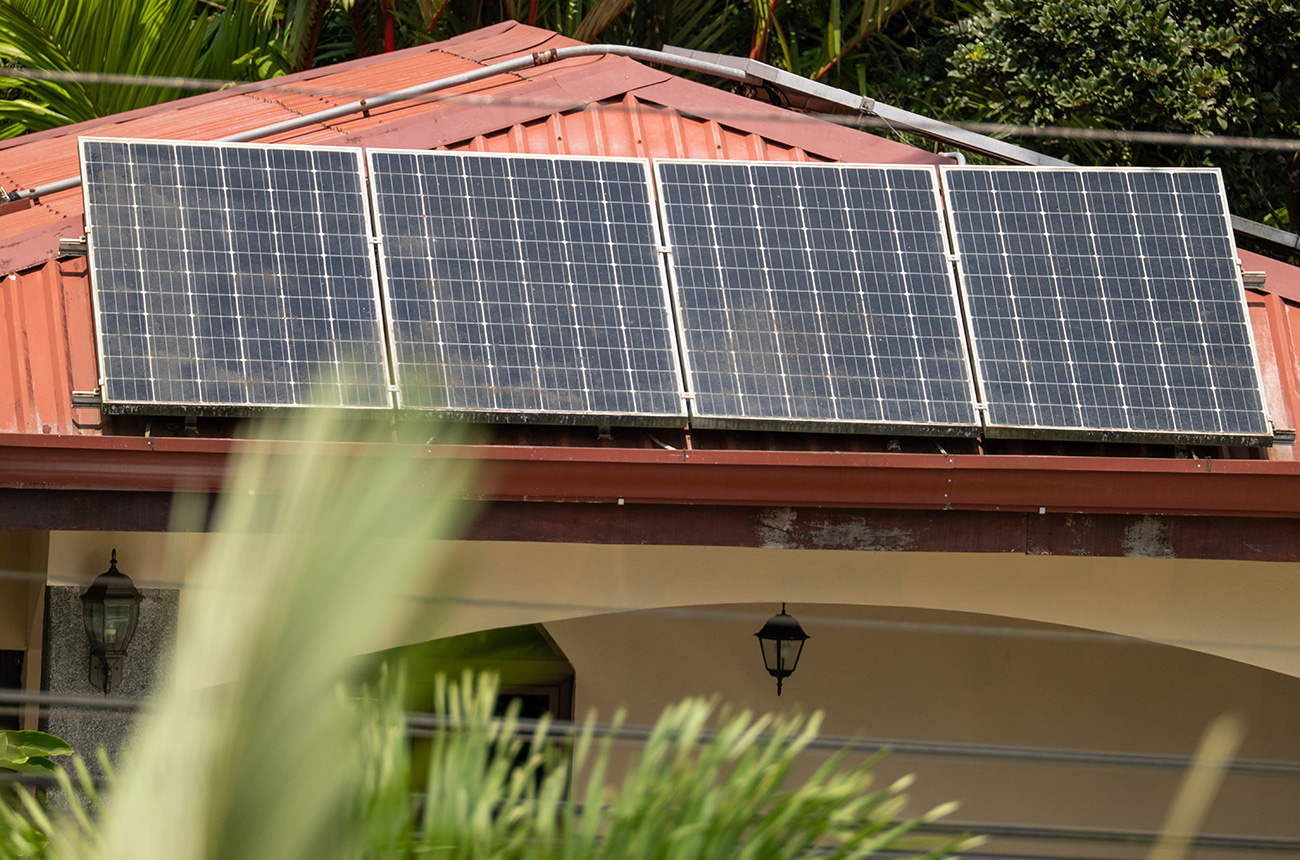
Very little, and this surprises people. Solar panels have no moving parts. Nothing spins, nothing needs oiling, nothing wears down through friction. The main thing that affects performance is simply how clean the glass is. In the Philippines, that means dust, ash, and bird droppings.
Over a few dry months, dust builds up on the glass and blocks sunlight, which brings your output down. Rain helps, rinsing off the loose dust, but it does not do a full clean. Anything greasy or stuck on, like bird droppings or ash, tends to stay put.
In long dry stretches, panels sometimes need an actual clean. You can do this yourself, up to twice a year, using a soft microfibre cloth or a soft mop head. Avoid sponges, stiff brushes, squeegees, or anything with a hard edge, since scratched glass permanently absorbs less light and damage from the wrong tools is not covered under warranty. Only clean what you can safely reach from the ground.
Once a year, panels also benefit from a professional clean. That means wet cleaning with de-ionized water and solar-safe brushes to lift off dust and bird droppings, clearing leaves and nests from underneath, and a visual check of the glass, conduits, and inverter. Book that through your installer.
You Can See Everything From Your Phone
You do not need to go up on the roof to know how your system is doing. Your inverter connects to your home internet and reports to an app.
Open it and you can see how much electricity your system is producing right now, plus daily, weekly, and monthly trends. If production drops unexpectedly or a component runs into an error, the app flags it so you know to call us. Most customers check it constantly in month one and then forget about it, which is the correct outcome.
What Your Warranties Cover
Different parts of the system carry different coverage, and it is worth knowing the difference before you need it. Your panels are covered 12 years against product defects, with a 30 year performance guarantee. The inverter and battery each carry 5 years. Our workmanship is covered for 1 year.
The different coverage lengths reflect what each part does. Panels sit there and collect light. The inverter is the working component, converting power all day, so it is the part most likely to need service at some point over a system's life. If the monitoring app indicates an irregularity, or if a severe typhoon passes through your area, you want a dedicated team ready to perform physical inspections, check electrical connections, and handle warranty claims if hardware ever fails.
The Point of All This
Rooftop solar is one of the few things you install once and then keep for decades. Rates on the grid move. Your own generation does not get repriced. Whether you pay in cash or monthly, you get the same system and the same support behind it.
Talk to us about what your roof can do.
Fill out the form below, and a member of our team will reach out to guide you every step of the way.
System sizes start at 5 kWp, grid-tied. Actual price and savings vary depending on system size and usage.