How Much Roof Space Do You Need for a 5 kWp Solar System?
Before anything else, most homeowners want to know one thing: will the panels even fit? It is a fair question. The solar installations most people have seen are on warehouses and malls, covering thousands of square meters. A residential roof looks nothing like that.
A 5 kWp system, the smallest system Solviva installs, fits comfortably on most Filipino family homes. Here is what that actually requires.
The Physical Footprint
Solviva installs 630-watt panels. At that output, a 5 kWp system needs 8 panels, which gives you a system rated at 5.04 kWp.
Each panel measures roughly 2.4 meters by 1.1 meters, or about 2.7 square meters of surface area. Eight panels come to around 21.6 square meters of actual panel coverage.
You need more roof than that, though. Installers need clearance to move safely during installation and future maintenance, panels are kept back from roof edges where wind uplift is strongest, and mounting rails need room to sit properly.
As a working number: 25 to 30 square meters of clear, unobstructed roof space is enough for a 5 kWp system. That is roughly the footprint of a standard parking slot and a half.
Higher-wattage panels are one reason the footprint keeps shrinking. Our panels convert about 23.3 percent of the sunlight hitting them into electricity, so the same roof area produces meaningfully more power today than it would have five years ago.
Space Is Not the Only Factor
Two roofs of the same size can produce very different amounts of electricity. Three things explain most of the difference.
Orientation.
The Philippines sits north of the equator, so south-facing roof planes capture the most sunlight across a full year. West-facing planes are also useful because they catch the afternoon sun, which is when air conditioners tend to be working hardest. Because we are close to the equator, the penalty for facing east or another direction is smaller here than in countries farther north. Very few roofs are ruled out on orientation alone.
Shading.
Trees, water tanks, adjacent buildings, and roof equipment all cast shadows that move through the day and shift across the year. Shading reduces output, and depending on how panels are wired, a shaded panel can affect others connected to it. It is also worth thinking ahead: a second floor next door or a tree that keeps growing can shade a roof that is clear today.
Roof structure and condition.
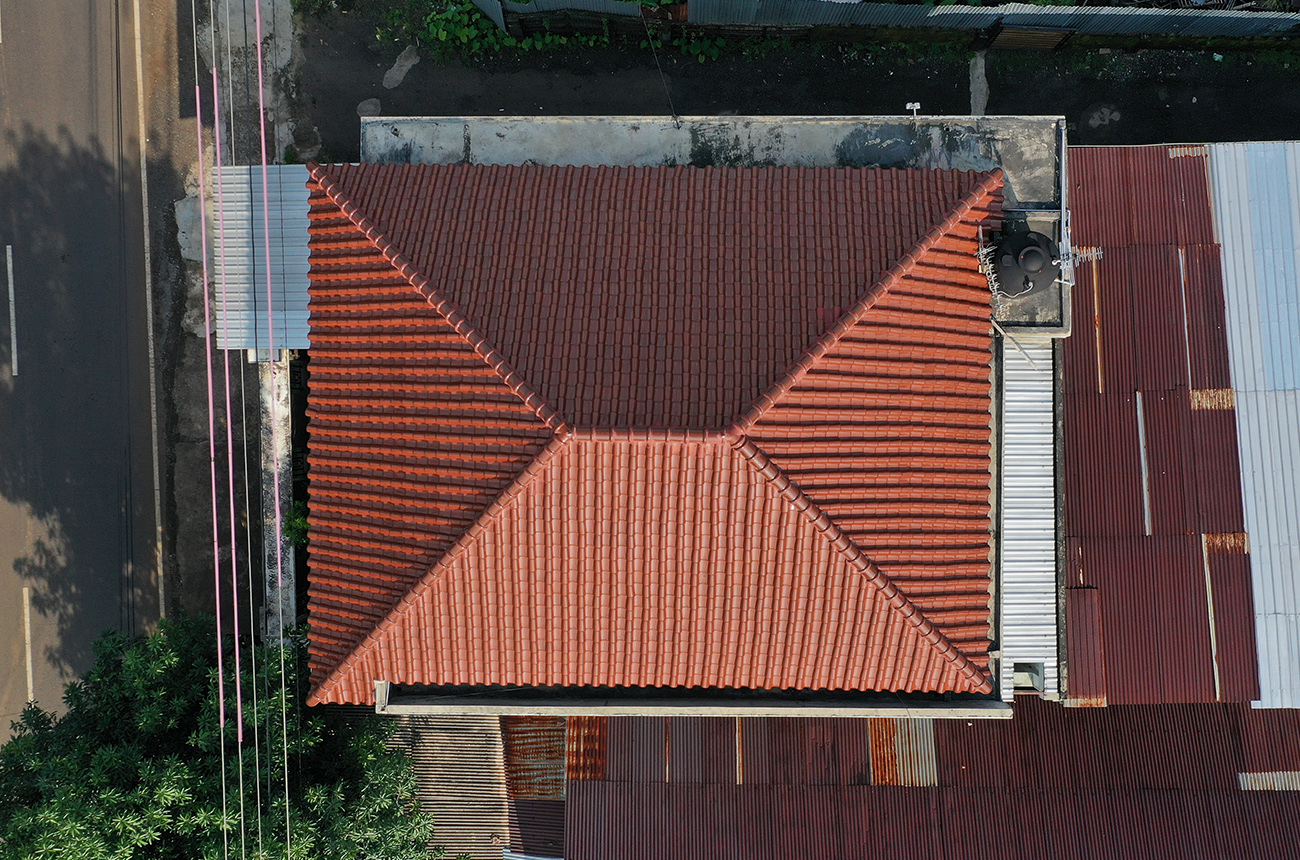
Mounting systems exist for galvanized iron (GI) sheets, concrete slabs, and clay tiles, so material is rarely the obstacle. What matters more is the frame underneath. An array and its mounting hardware add sustained load to your trusses for 25 years or more, plus wind uplift during storms, so the structure needs to be sound before installation. Roof age is worth considering too. If your roofing is near the end of its life, it is easier to address that first than to remove and refit panels later.
Your Roof Does Not Need to Be One Clean Rectangle
Eight panels do not have to sit in a single block. They can be split across roof faces to work around vents, dormers, and shaded sections.
This is what a site assessment is for. Our team checks your usable roof area, notes any shading issues, and inspects the roof structure for rust, cracks, leaks, anchor points, and load capacity before designing a layout around what is actually there.
The Short Version
Around 30 square meters of clear roof space is enough to run a 5 kWp system, and most family homes have that. Whether yours qualifies comes down to orientation, shading, and the condition of your roof frame, all of which are straightforward to check.
Find out what your roof can do.
Fill out the form below and a member of our team will get in touch.
https://www.solvivaenergy.com/contact
System sizes start at 5 kWp, grid-tied, and are recommended for electricity bills of ₱10,000 and above. All Solviva systems are hybrid-ready.
Actual price and savings vary depending on system size and usage.