Why Brownouts Keep Happening in the Philippines
Update, May 18, 2026: The Visayas grid was placed under yellow alert this afternoon, signaling that supply conditions remain tight as the week begins. The situation continues to develop. (GMA News Online)
Millions of homes across Luzon and the Visayas went dark last week, some for hours at a stretch, after the country's power grid hit its first red alert of 2026. Summer demand was climbing, plants were dropping offline, and the system ran out of room. (Inquirer Business)
The questions that followed were predictable: Why does this keep happening? Who's responsible? And what does any of it mean for my home?
Here's the full picture, from the power plant to your plug.
Step 1: Someone Has to Make It
Everything starts at a power plant. The Philippines draws from a mix of sources: coal, natural gas, geothermal, hydropower, solar, and wind – though fossil fuels still dominate the generation mix. That electricity flows into one of three grids serving the country's three main island groups: Luzon, Visayas, and Mindanao. Each operates separately, which is why what happens in Luzon doesn't automatically affect Mindanao.
Luzon powers the most people and carries the heaviest load, which also makes it the most exposed when generation tightens.
Generators sell their output either through long-term supply agreements with distributors, or through the Philippine Wholesale Electricity Spot Market (WESM) — established under the EPIRA law as the venue for trading electricity as a commodity, where prices are governed by market forces and supply conditions. (IEMOP) The generation portion of your monthly bill moves with those conditions, shifting based on fuel costs, exchange rates, and what electricity was trading for in the spot market that month. (Meralco)
Step 2: The NGCP Moves It Across the Country
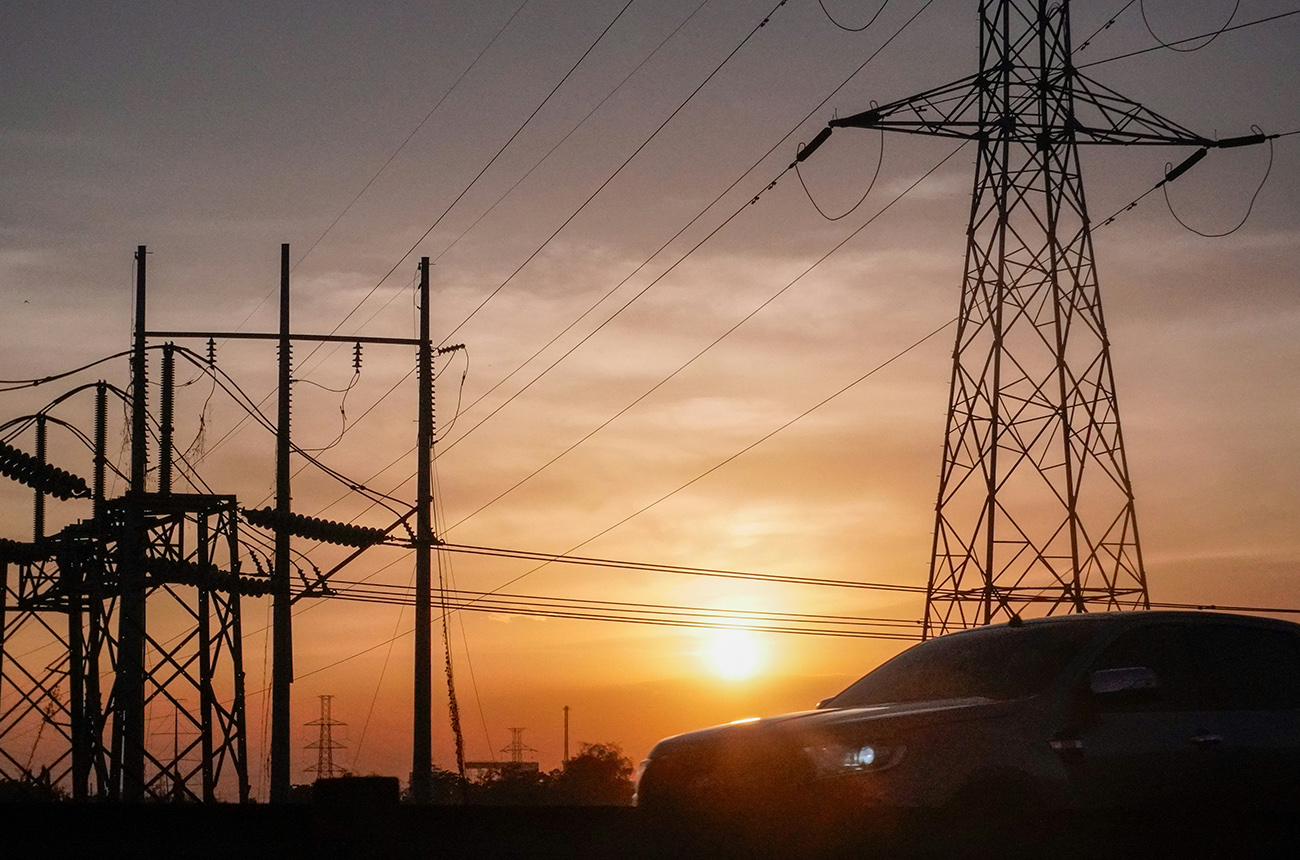
High-voltage electricity doesn't just appear at your nearest substation. It travels, sometimes hundreds of kilometers, through transmission lines strung across those steel towers you pass on the highway.
The National Grid Corporation of the Philippines (NGCP) owns and operates that highway. As the country's sole transmission provider, it manages the movement of bulk power from generation plants to distribution hubs across all three grids. It doesn't produce electricity, and it doesn't deal with end consumers directly. Its job is to keep the system in balance and the power moving. (Philippine News Agency)
To communicate how stressed the grid is at any given moment, NGCP uses a four-tier alert system: (GMA News Online)
White alert: The grid is operating normally. Supply is more than adequate.
Yellow alert: Reserves are thinning. Supply can still meet demand, but the safety buffer has dropped below required levels.
Red alert: Supply can no longer keep up with demand. Power cuts become necessary.
Step 3: Your Distribution Utility Gets It to Your Door
Before electricity can enter your home, it passes through substations that bring the voltage down to usable levels. From there it runs through local distribution lines, past your meter, and into your circuits.
In Metro Manila and nearby provinces, your distribution utility supplies millions of customers across its franchise area. Your distribution utility doesn't generate any of the power it delivers; it buys from generation companies and passes it along. The transmission and generation charges on your bill go directly to NGCP and the generators. Your distribution utility earns only from the distribution portion of your bill.
In areas outside Meralco's franchise, distribution falls to regional private utilities and electric cooperatives.
Why Brownouts Happen: The Math Behind the Outage
Here's the fundamental challenge: the power grid has no real storage. Electricity is produced and consumed in the same instant. Whatever is generated has to go somewhere – and if supply and demand fall out of balance, the whole system is at risk.
Consumption isn't steady throughout the day either. It surges three times daily: around 11 a.m., 2 p.m., and 7 p.m. These are when households and offices run appliances in parallel. On a hot afternoon at the peak of summer, that surge can be severe. (Philstar)
When available generation starts falling short of demand, NGCP steps through its alert levels. Once a red alert is declared, waiting is no longer an option. NGCP instructs distribution utilities like Meralco to begin cutting power to groups of customers on a rotating basis, a process called Manual Load Dropping (MLD). Each affected area typically goes dark for two to three hours before power is restored and the next group takes a turn. (GMA News Online)
The goal is to release enough pressure on the system to keep the entire grid from collapsing at once.
What Happened: May 13 to 16, 2026
The week's crisis began in the early hours of May 13. The 500 kV Tayabas-Ilijan and Dasmariñas-Ilijan transmission lines tripped at around 6:30 a.m., severing nearly 2,500 MW of generation capacity from the grid in an instant. That included both Ilijan gas plants (1,200 MW combined) and all three EERI LNG units (1,262.1 MW combined). Masinloc Unit 3 followed shortly after, adding a further 325 MW forced outage to the deficit. (Philippine News Agency)
The lines were eventually restored by afternoon, but that didn't fix the problem. Gas plants can't simply be switched back on. They need time to resynchronize safely, meaning the capacity gap persisted well into the evening and beyond. (ICSC)
By NGCP's own numbers, available capacity in Luzon dropped from a projected 16,975 MW to just 12,447 MW. (ICSC) Two days later on May 15, the situation had worsened: 17 plants were on forced outage, total unavailable capacity had climbed to 4,828 MW, and the supply deficit reached 852 MW. (GMA News Online)
Meralco implemented rolling outages throughout the week. On May 15 alone, more than 540,000 customers across NCR, Bulacan, Cavite, Laguna, Quezon, and Rizal lost power for up to three hours. (GMA News Online) To ease the pressure, Meralco called on large commercial and industrial customers enrolled in its Interruptible Load Program to switch to their own generators, collectively freeing up around 250 MW of grid capacity. (GMA News Online)
The DOE Secretary Sharon Garin said the two tripped lines had been carrying roughly 12 percent of Luzon's total supply at the time of the failure."An incident of this scale demands full technical disclosure, clear accountability, and immediate corrective action," she said, directing NGCP to address the transmission constraints and ordering San Miguel Global Power to expedite the restoration of Masinloc Unit 3. (Philippine News Agency) The DOE and the Energy Regulatory Commission jointly ordered NGCP to produce a comprehensive incident report on everything that happened between May 12 and 14. (GMA News Online)
By Saturday morning, May 16, three plants, GNPower Dinginin Unit 1, EERI Unit 2, and EERI Unit 3, came back to full capacity, adding a combined 1,510 MW to Luzon's supply. Combined with the natural drop in weekend demand, the grid swung from deficit to surplus, and Luzon began exporting power to the Visayas. (Manila Times, Philstar)
The Bigger Picture
This was not an isolated incident. Back in April, the same LNG plants went dark simultaneously, same cause, a shared terminal failure. Two major supply crises in under a month, from the same root vulnerability.
The Institute for Climate and Sustainable Cities (ICSC) flagged exactly this in its May 14 statement, calling out the structural risk of building so much of the grid around a handful of centralized assets. "Whether through a shared LNG terminal or a critical transmission corridor, disruptions in these critical nodes can quickly cascade into broader system-wide supply shortages and grid instability," ICSC said. (ICSC, May 14, ICSC, April 17)
Analysts have been raising this concern for years, and the week validated it again. Too much of the country's power supply still runs through too few plants, too few fuel supply chains, and too few transmission corridors, any one of which can take down a significant portion of the grid when it fails. (Philstar)
The DOE's Power Development Plan 2023 to 2050 lays out the path forward: 35% renewable energy in the generation mix by 2030, and 50% by 2040. (Department of Energy)
ICSC goes further, calling for not just more renewable capacity but more geographically distributed generation, built so that no single plant, terminal, or corridor can trigger a cascade like the one the country just lived through. (ICSC)
Getting there will take time, investment, and infrastructure that doesn't exist yet. In the meantime, the most useful thing households can do is take pressure off the system during peak hours, roughly 11 a.m. to 8 p.m. Run heavy appliances early in the morning or late at night. Set the aircon a degree or two higher. Unplug what you're not using.
Understanding how the system actually works, from where your electricity comes from, to who moves it, who delivers it, and what happens when any part of that chain breaks, is the starting point for navigating it more clearly, and for making smarter decisions about your home's energy setup for the long term.
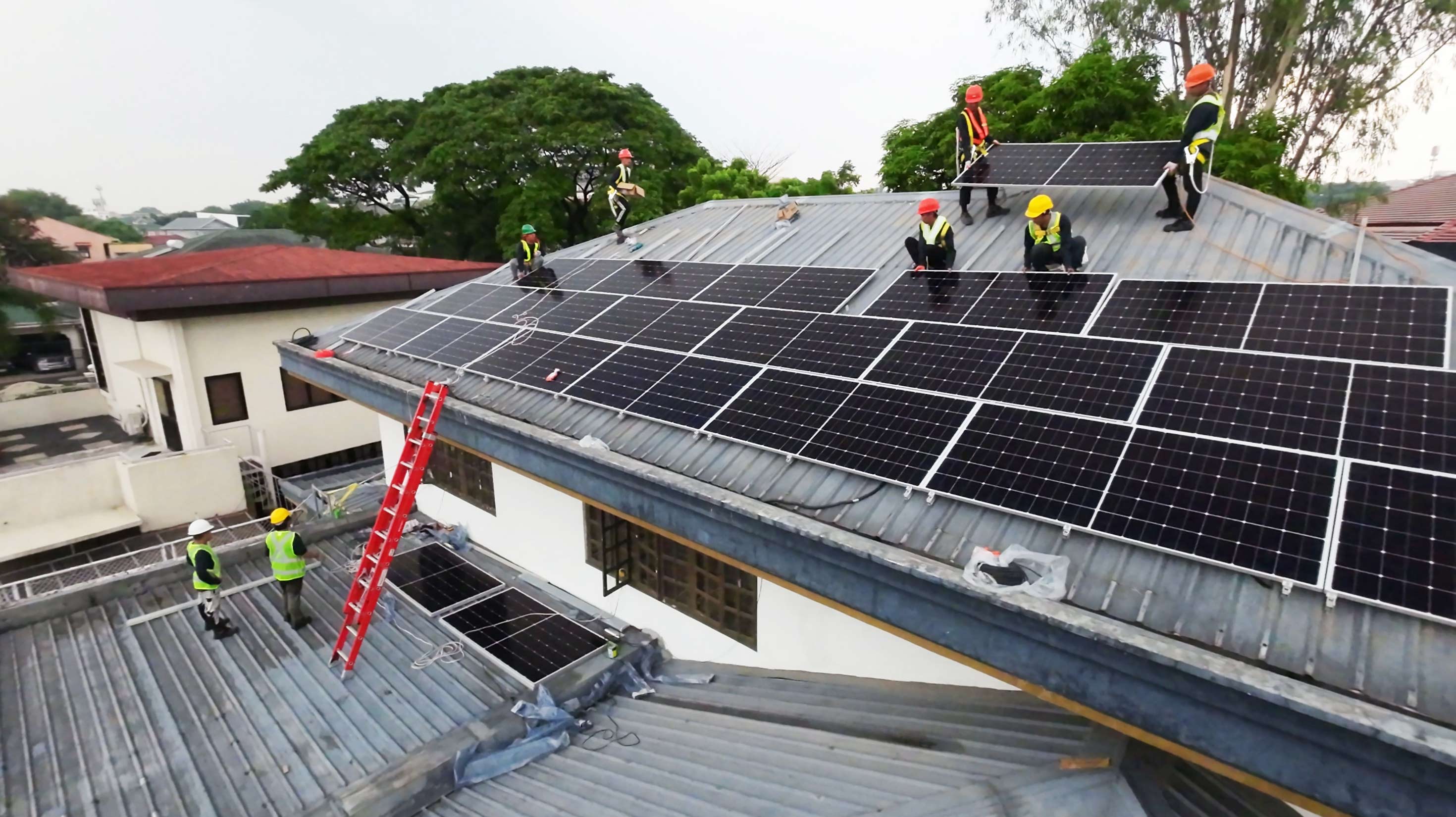
If you'd rather take some of that pressure off your own household directly, see how a Rent-to-Own solar system works: The Easiest Way to Switch to Solar: A Guide to Rent-to-Own Solar.
Sources: Inquirer Business, Meralco official advisories, Philippine News Agency, GMA News Online, Rappler, Institute for Climate and Sustainable Cities, Philstar, Manila Times. Data covers May 13 to 16, 2026.