
Solar or Savings Account: Where Should Your Extra Money Go?
Most Filipinos keep extra money in a savings account because it feels safe. That instinct makes sense. But there is another place your money already goes each month: your electric bill.
A savings account is money you set aside. Your electric bill is money you already spend every month. Solar does not ask you to find new money. It asks you to redirect money that is already leaving your account.
The comparison that matters
A savings account grows slowly and in a steady way. You put money in, it sits, and the balance rises over time. That is what it should do for an emergency fund or a short-term goal.
Solar works differently. It is not really trying to replace your savings account. It is trying to replace your utility bill. With a Rent-to-Own solar system, you do not need a big lump sum at the start. It begins at ₱0 down, then you make fixed monthly payments instead of a variable electric bill.
That is the real trade: a varying monthly cost you cannot control, swapped for a fixed one, on a system that is yours once the term ends.
What solar can promise, and what it cannot
It is worth being direct, because a lot of solar marketing oversells. Solar output is predictable across a year, not from one month to the next. Cloud cover, season, and home use can move the numbers around month by month, even when the yearly trend stays steady.
No one can promise a specific savings amount or return. It depends on system size, your use, and your rates. What can be said honestly is this: a solar system is built to create a return over 25 to 30 years, which is also close to its expected design life.
That is a much longer view than most people use when they compare solar with a savings account. It is not a quick win. It is a long, steady one.
Cash purchase or Rent-to-Own
There are two ways to get there.
A cash purchase means paying for the system up front, with nothing owed after that. It is the more direct path if you have the money ready and do not want a monthly payment.
Rent-to-Own starts at ₱0 down. Instead of one large payment, you make fixed monthly payments over the term. Those payments replace part of what you would otherwise send to your utility. When the term ends, ownership transfers to you.
Neither path is always better. It depends on how much cash you have sitting idle and how much you want to keep on hand.
What a system actually looks like
If you are looking at a home solar system in the Philippines, the numbers usually start at 5 kWp. That is the smallest grid-tied size Solviva installs.
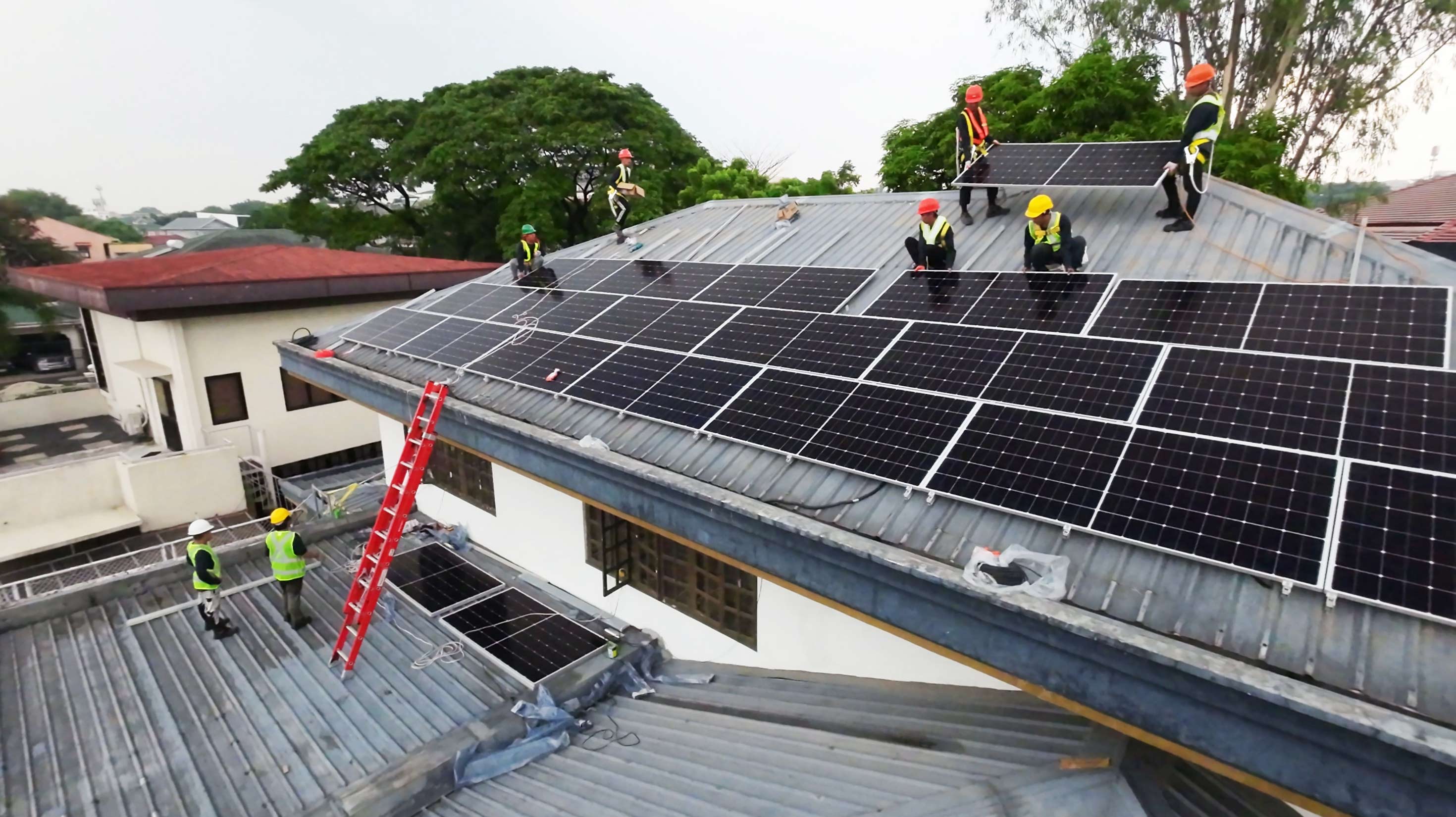
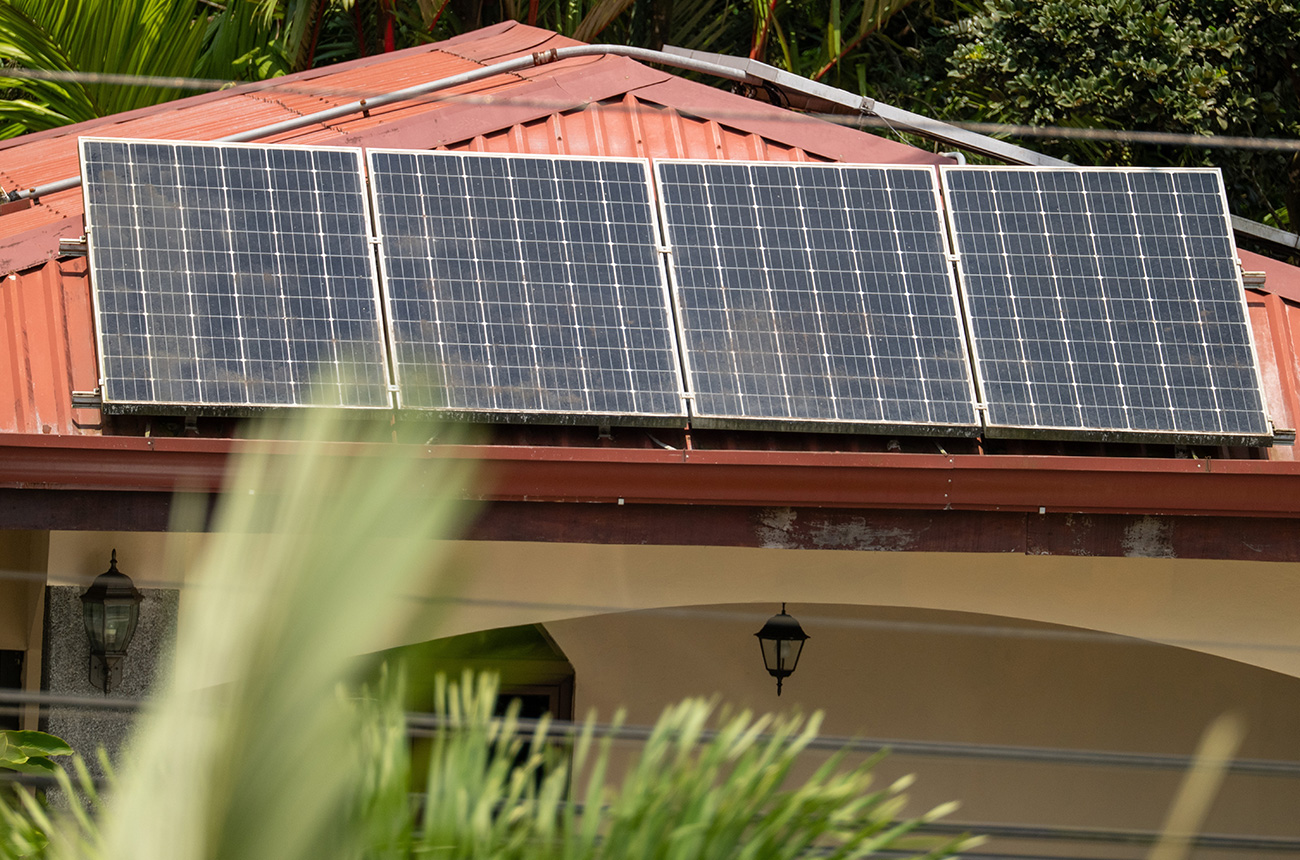
A standard 5 kWp system uses 8 panels rated at 5.04 kWp and needs about 25 to 30 sqm of clear roof space. It is usually recommended for homes with electricity bills of ₱10,000 and above, because that is where the math starts to make sense.
Most people comparing residential solar panel packages in the Philippines start at this size. A grid-tied system in the Philippines lets you run on solar during the day and draw from the grid when you need it.
The panels come with a 30-year performance warranty and a 12-year product warranty. They also have about 0.4 percent degradation each year, so the system you install now can still do useful work many years from now.
Thinking about switching to solar? Talk to a member of our team to book a free solar consultation. We will look at your electricity usage and location and help you choose the system that fits.
System sizes start at 5 kWp, grid-tied, and are recommended for electricity bills of ₱10,000 and above. Actual price and savings vary depending on system size and usage.